
★ 1st place of 150 international teams · IKEA challenge, Student Service Design Challenge 2024
Plugg-out
A service that turns invisible standby power into feedback households can see, and act on.
- Context
- The IKEA challenge at the Student Service Design Challenge 2024. 5 months, 4 designers from Delhi Technological University.
- Problem
- Idle appliances keep drawing power on standby. Nobody sees the loss, so nobody owns it, and Delhi households pay for electricity they never use.
- My role
- One of four designers working hand in hand on everything. I owned the primary research, the service design, the service blueprint and flow, and the animations and videos that carried the final pitch. Synthesis we did together.
- Outcome
- A smart plug, companion app and full service blueprint, tested over four prototype rounds. The jury chose it for being simple, practical and implementable.
- Client / Org
- Student Service Design Challenge (IKEA section)
- Timeline
- 5 months
- Team
- 4 designers, Delhi Technological University
The brief
Find a waste people don’t see.
The IKEA challenge asked for a service that cuts household waste. Food and water waste were obvious. We went after one nobody talks about: electricity that appliances draw when they look switched off.
Vampire power
Off isn’t off.
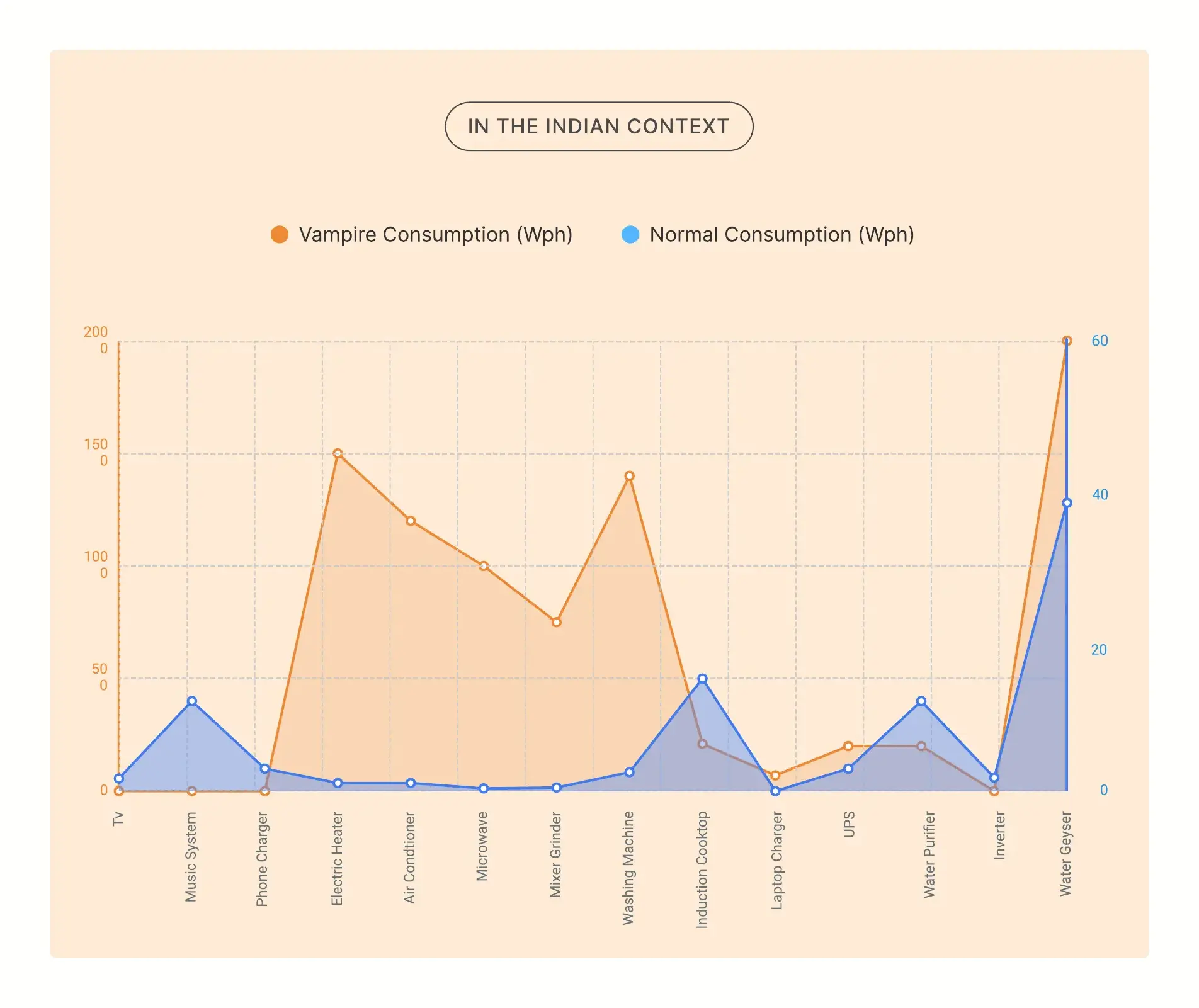
Standby or vampire power is what appliances use while switched off or waiting: the TV listening for its remote, the charger left in the wall, the geyser and the inverter idling. Some appliances draw more on standby than you would guess.
In Delhi
Small per home. Huge across a city.
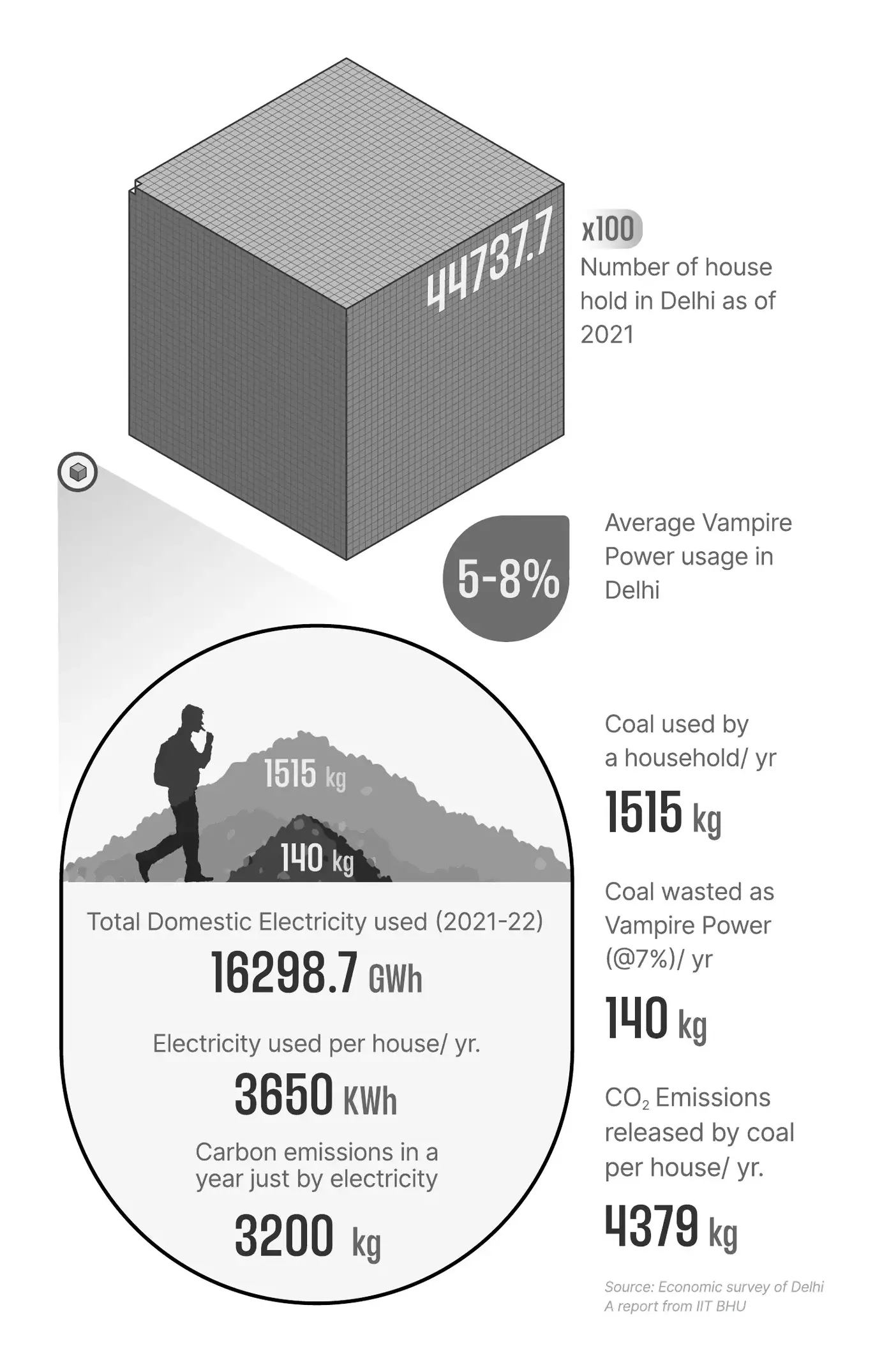
A few percent of a bill doesn’t feel worth acting on. Multiplied across Delhi’s households, it is coal burnt for nothing.
- 5–8%of a Delhi household’s electricity is vampire power
- 87%of the 64 people we surveyed had never heard of it
- 5,500 MUIndia could save by switching off appliances not in use
The cost of it
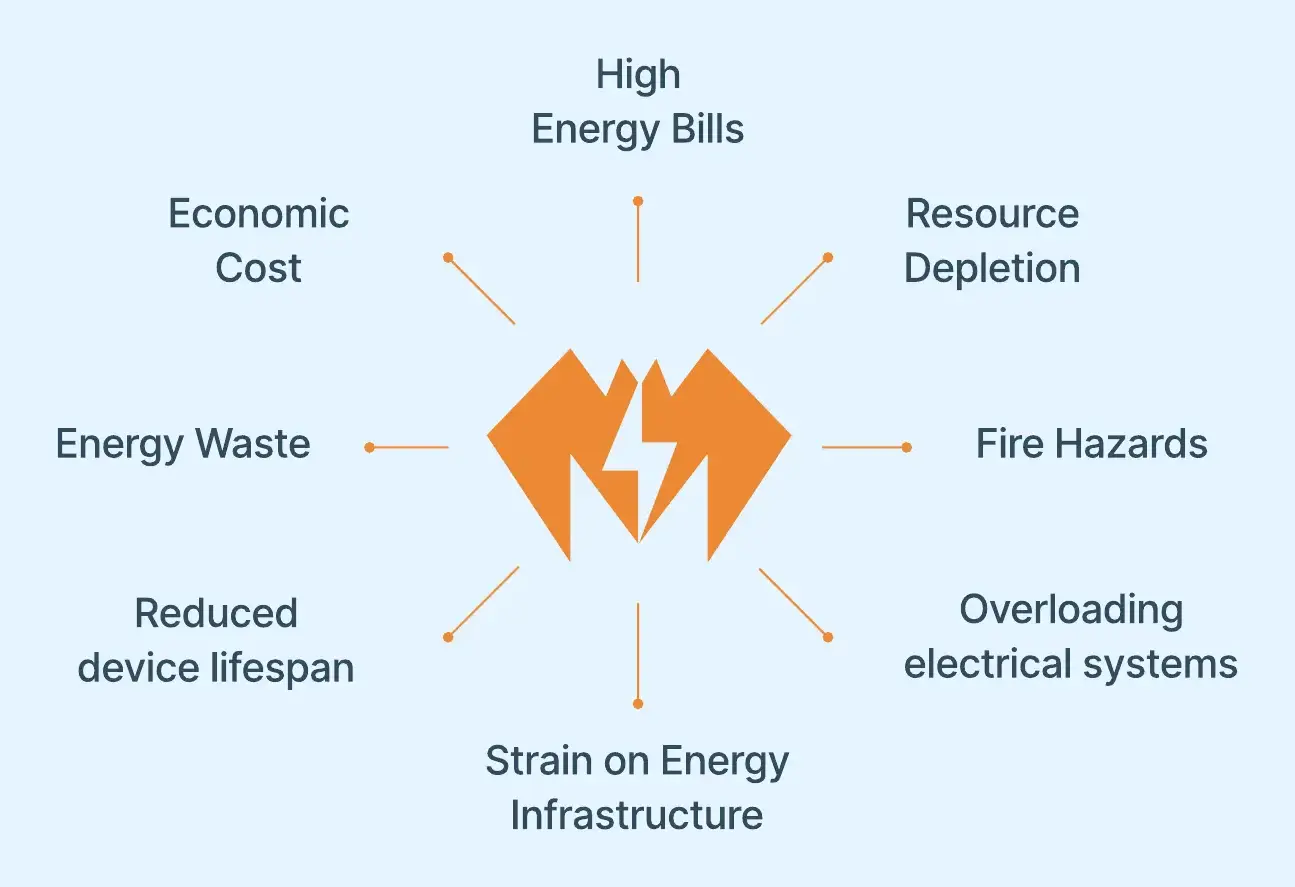
What one city’s standby adds up to.
Higher bills, wasted coal, strain on the grid, shorter device life and a fire risk, from devices nobody thinks of as on.
The system
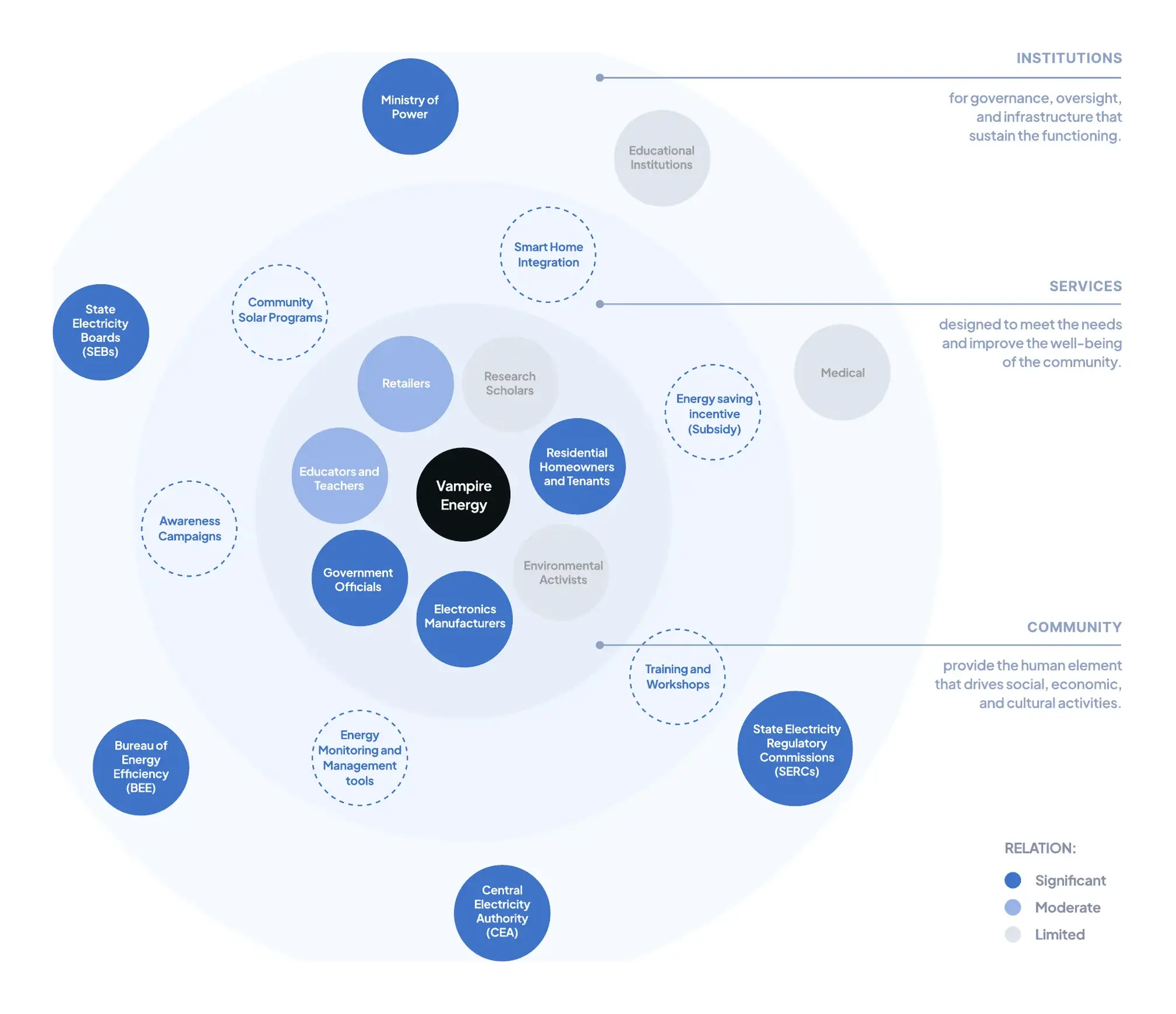
Who has a stake in a switch.
We interviewed across the system: households, an electricity board, an electronics manufacturer and an electrical engineering professor. The manufacturer was candid that standby lights are added for looks, and that talking about vampire power would hurt sales.
I don’t care much, because the bill that comes is three ways split.
Inside homes
Why the switch stays on.
Contextual interviews, cultural probes, observation and body-shadowing in Delhi homes kept surfacing the same reasons.
- A split bill means nobody owns the waste.
- Modern interiors hide switches behind furniture and panels.
- People believe the remote, or unplugging the phone, turns a device fully off.
- Delhi’s 200 free units make small savings feel pointless.
Root causes
Convenience beats conservation.
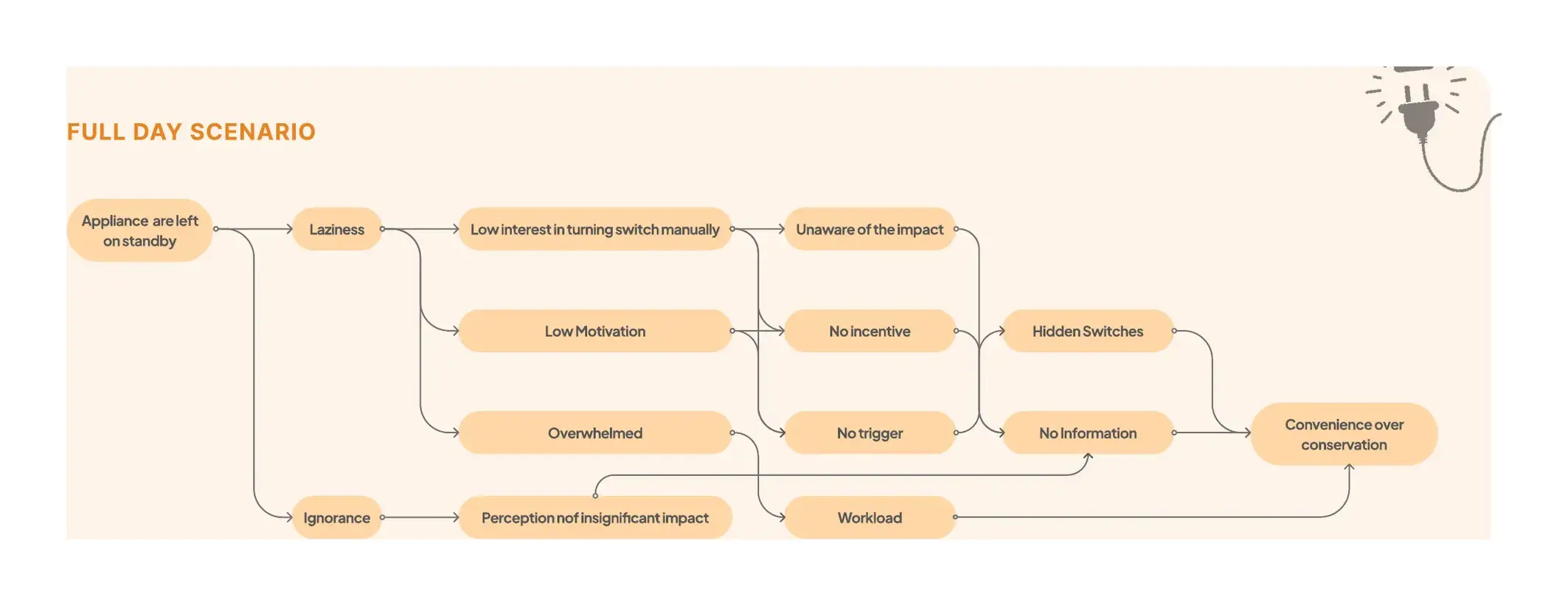
Tracing a full day in a household showed how laziness, low motivation and missing information all end in the same place.
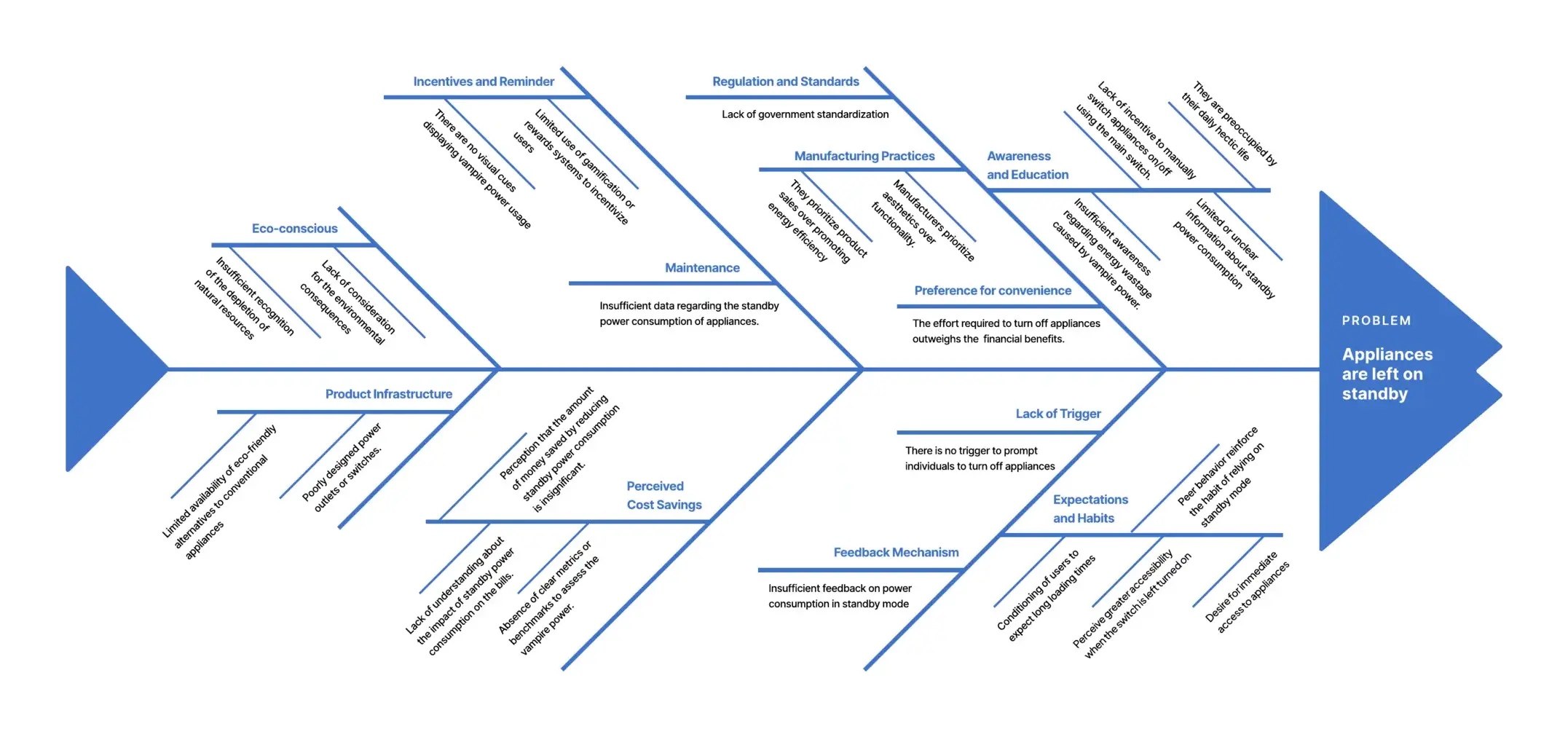
Every cause
An Ishikawa of everything that leaves appliances on.
No visual cues, no trigger to act, no standards from the government, products designed for sales over efficiency, and no feedback on what standby costs.
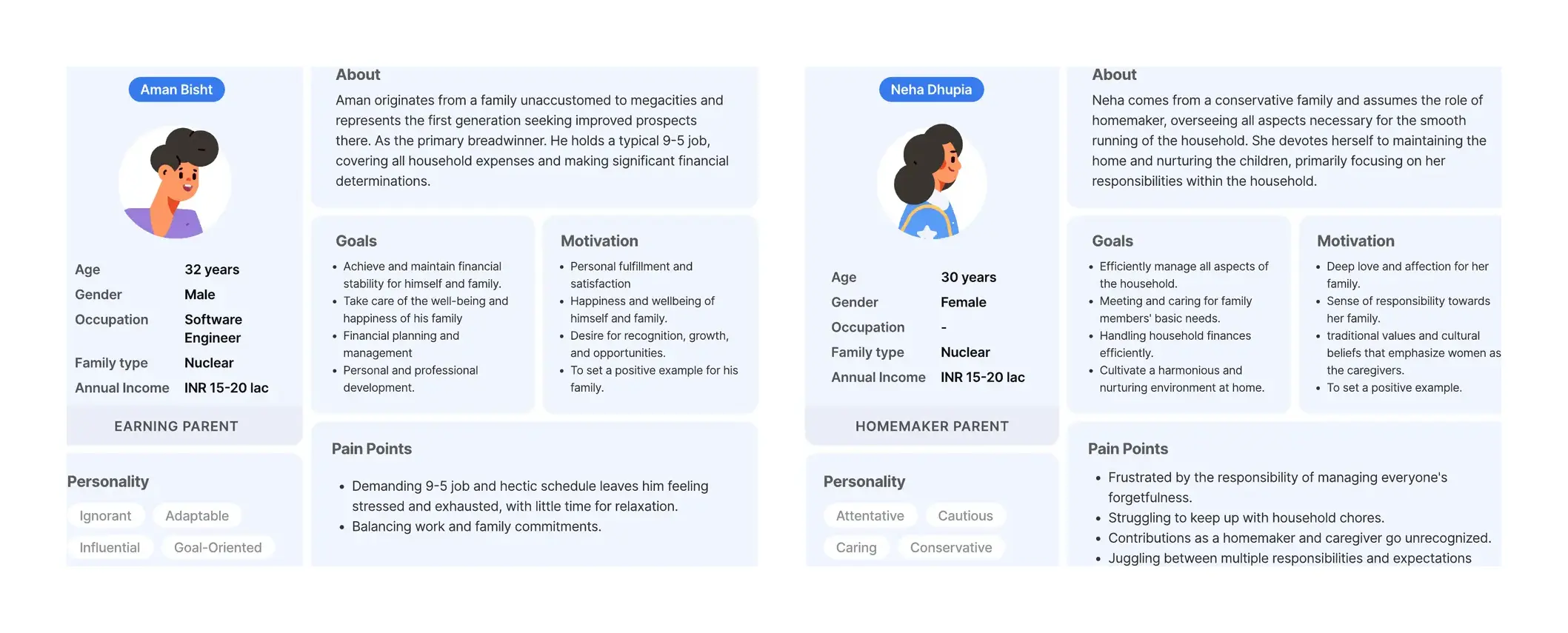
Who decides
The provider sets the habits.
One person in a family usually shapes how everyone uses power. We built two personas, an earning parent and a homemaker parent, and redefined the problem around them.
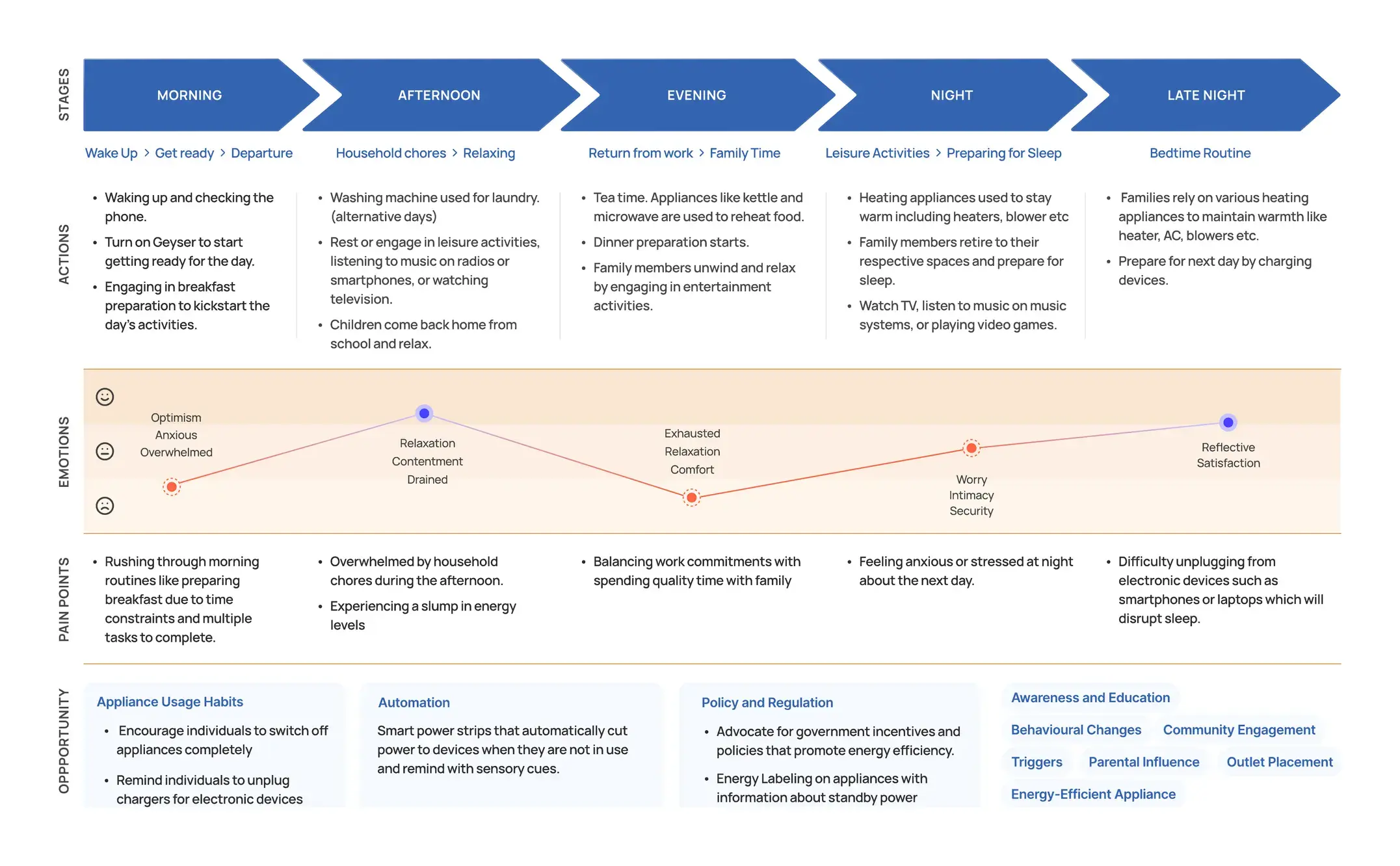
A day at home
From the morning geyser to the late-night charger.
How can we enable providers in a family to change their habits and cut vampire power at home?
If we control standby loss, we can actually control the peak demand.
What to build
An add-on, not a renovation.
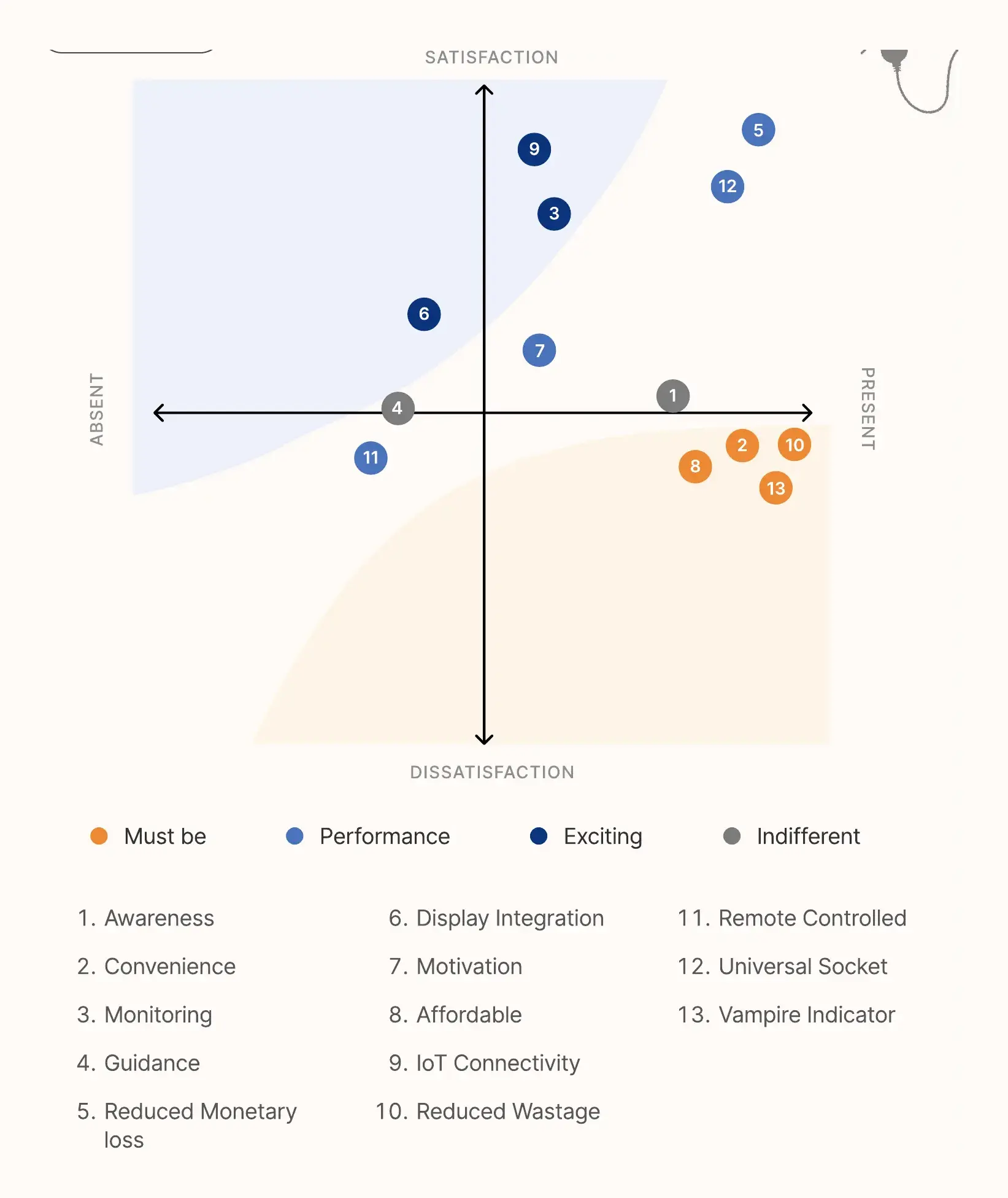
A Kano analysis ranked the features. Surveys and experts set the limits: people won’t rewire switches or replace working appliances, and it has to be cheap. 77% of respondents preferred a smart solution.
The product
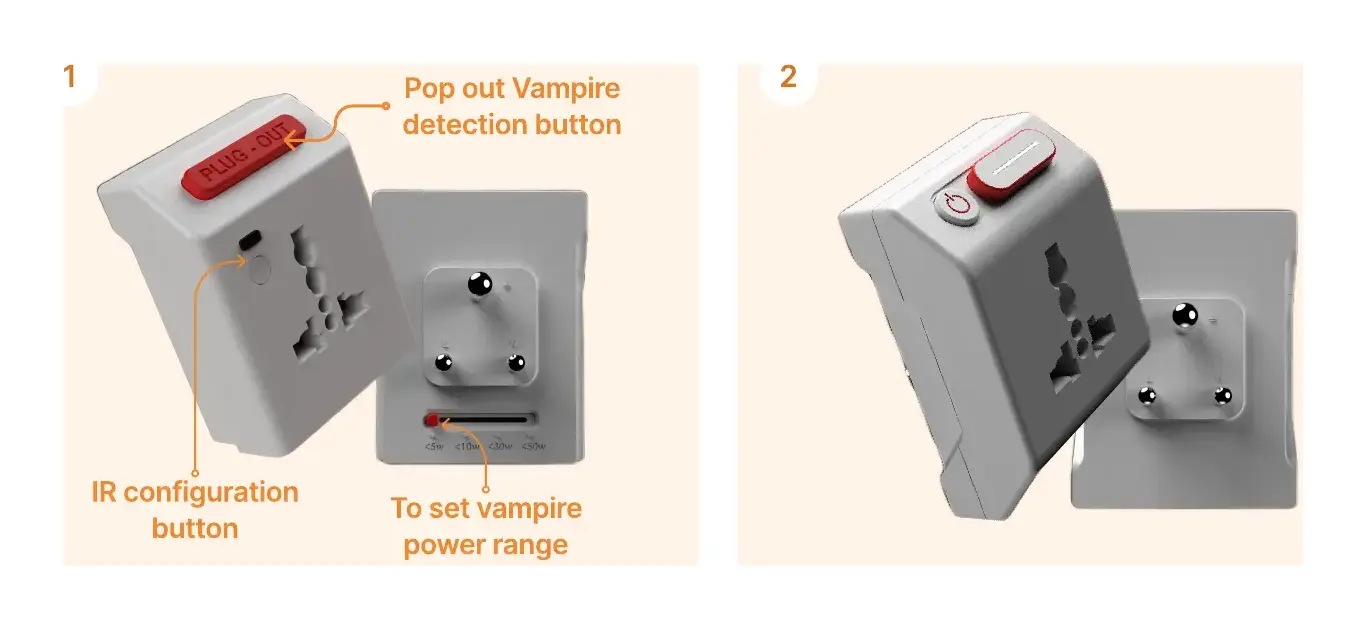
Two plugs that cut standby for you.
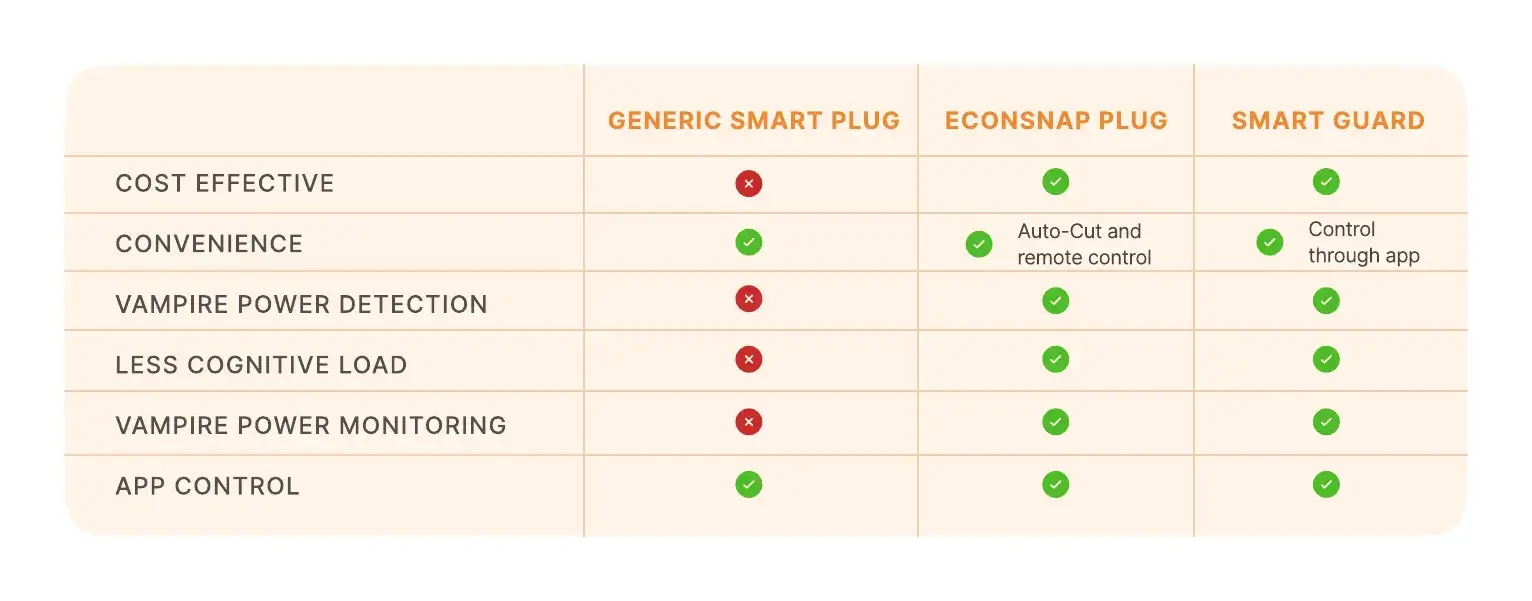
EcoSnap (₹300) cuts power automatically when a device slips into standby. Smart Guard (₹500) does the same and connects to the app.
The app
Make the meter move.
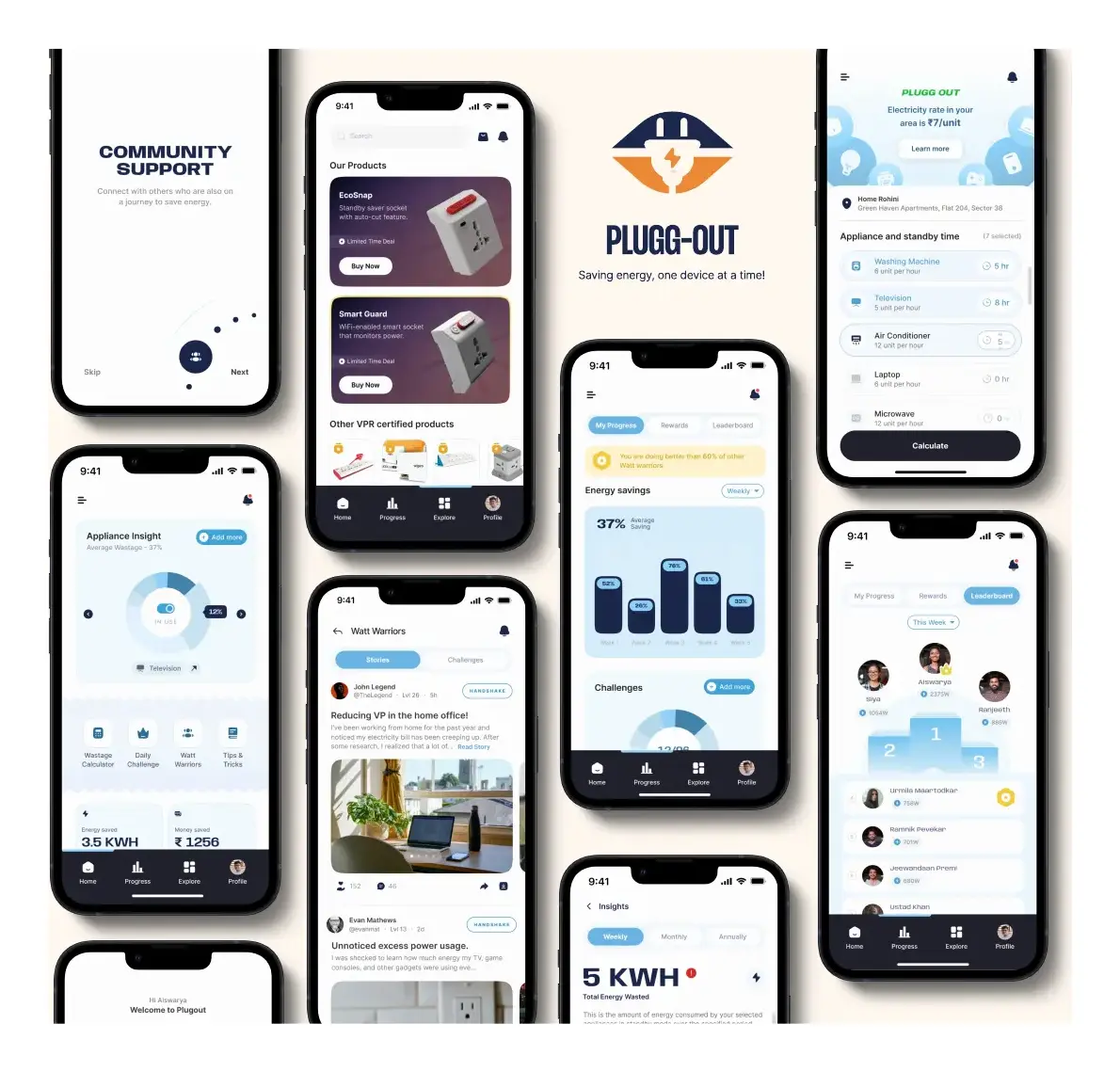
The app shows what standby is costing, sends reminders, sets weekly challenges and keeps a leaderboard, so saving becomes something you can see and compete on.
The service
A free month, then a habit.
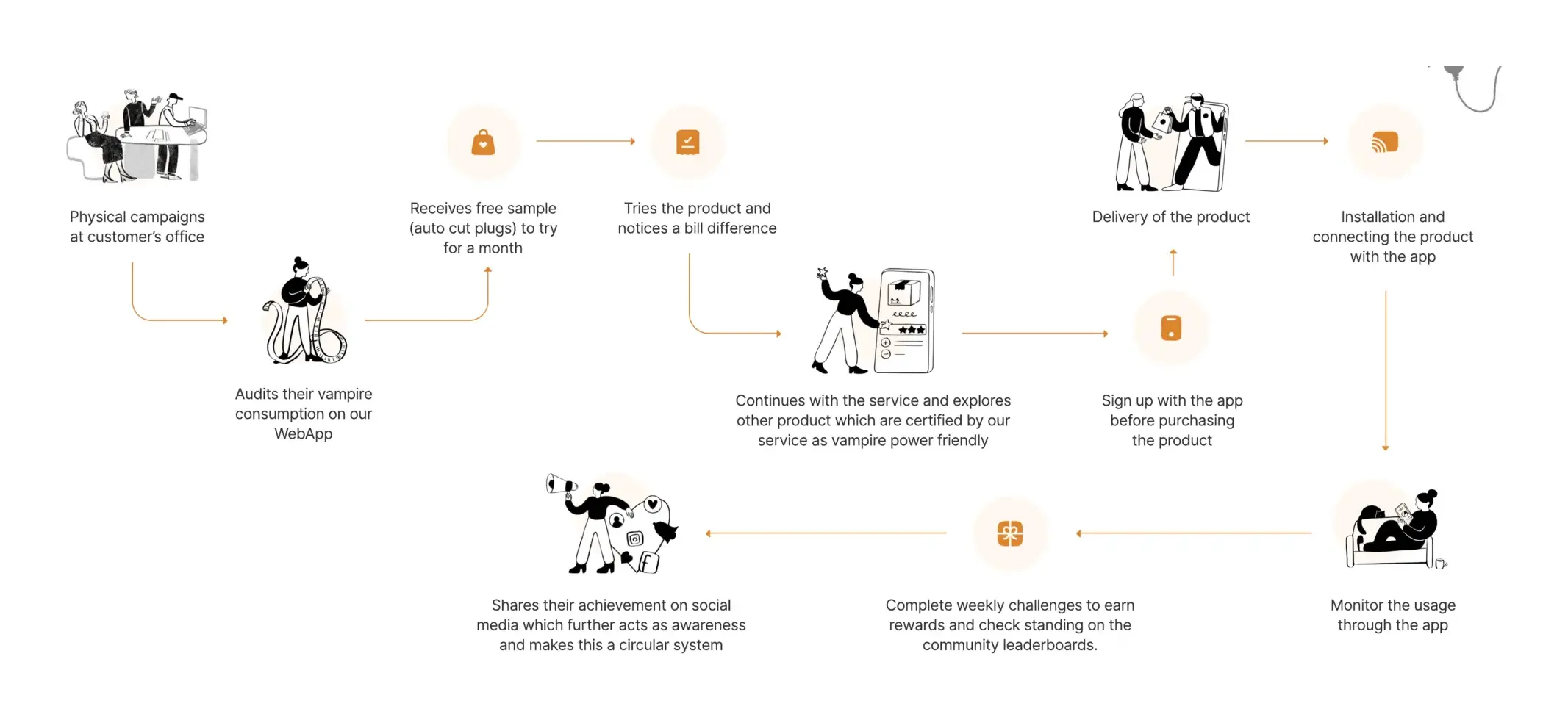
Awareness campaigns with electricity boards and NGOs lead people to audit their standby use on the web app. They get a free auto-cut plug for a month, see the difference on the bill, then sign up, install, monitor, take weekly challenges and share what they saved.
Service blueprint
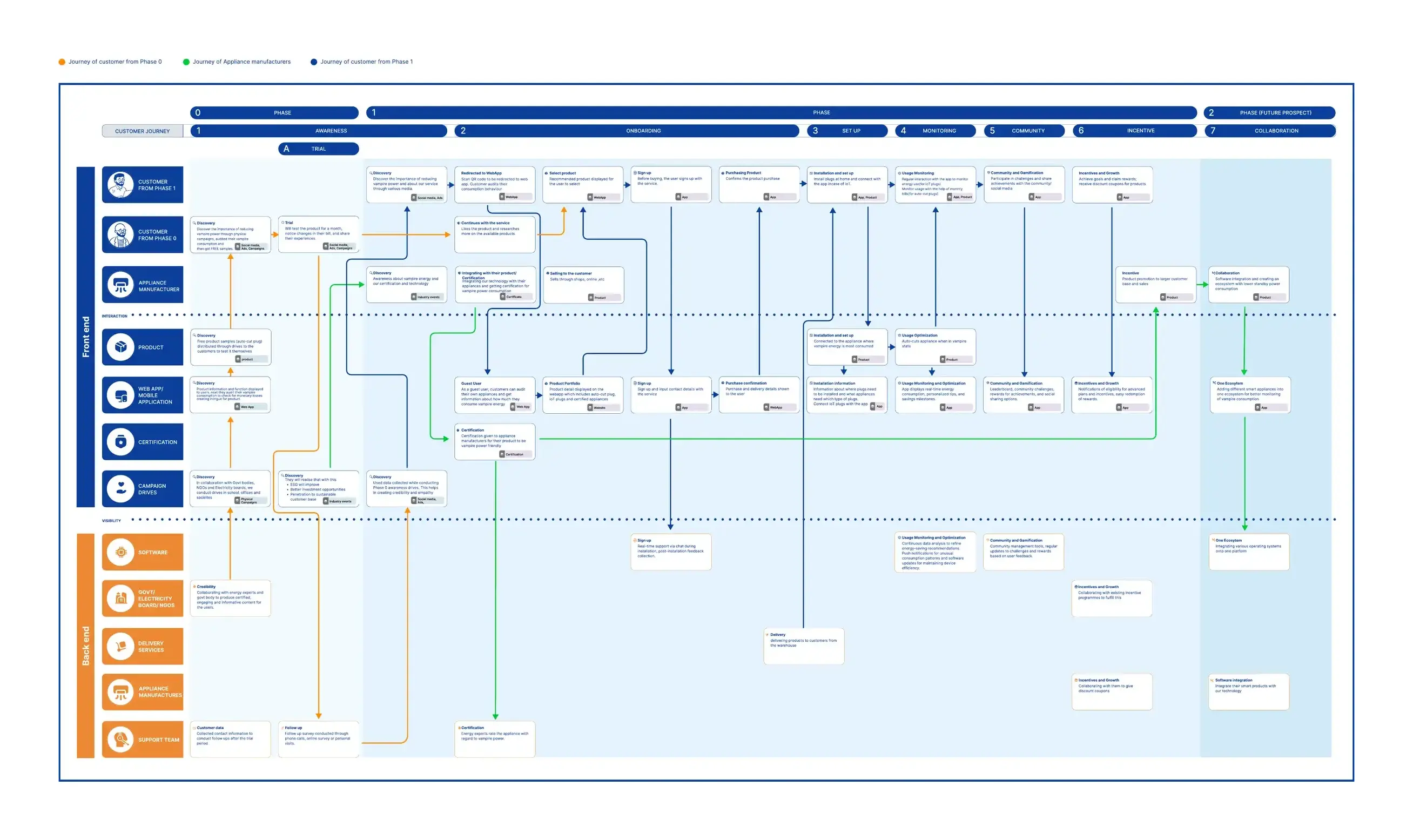
Customers, manufacturers and the future, in one blueprint.
The service also certifies appliance manufacturers as vampire-power friendly, which lifts their ESG scores.
Business model
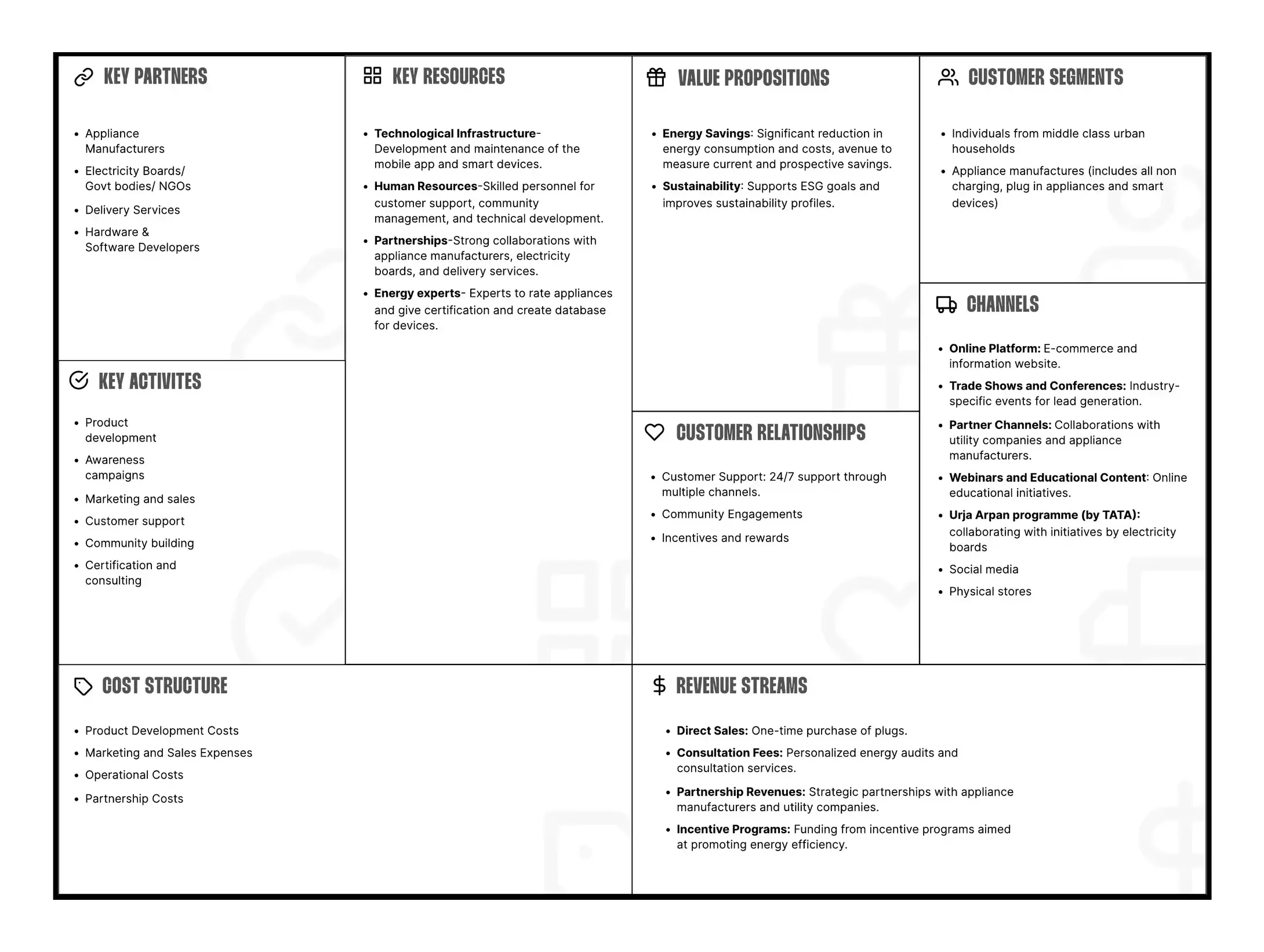
Plugs, partnerships and certification.
The pitch
Our four phase films, with sound.
Simple, practical, and implementable.
1st of 150 teams.Make the invisible visible.
IKEA challenge, Student Service Design Challenge 2024.