
SPCE
A reusable packaging loop for small Indian food businesses, from bamboo-paper containers to local collection and recycling.
- Context
- A solo masters project at Delhi Technological University, with mentor reviews.
- Problem
- India generates 3.5M tons of plastic packaging waste a year and recycles about 10–15% of it. Small food businesses pay a 20–50% premium for packaging that's thrown away after one meal.
- My role
- Research across owners, riders, customers and recyclers; material and product design; the service blueprint and business model.
- Outcome
- A hybrid bamboo, paper and foil container, prototyped against conventional packaging, inside a recovery loop run with local micro-factories.
- Client / Org
- Self-initiated · Service & Product Design
- Timeline
- Masters project, DTU
- Team
- Solo, with mentor reviews
The problem
Every delivery order ends in a container nobody wants back.
Delivery and takeaway are now more than half of India’s food service. Most of it leaves the kitchen in plastic, and most of that plastic is never recycled. Small restaurants feel it twice: sustainable options cost them more, on margins that are already thin.
- 3.5M tonsof plastic packaging waste in India every year
- 10–15%of it is actually recycled
- 20–50%more, for packaging that isn’t plastic
The market
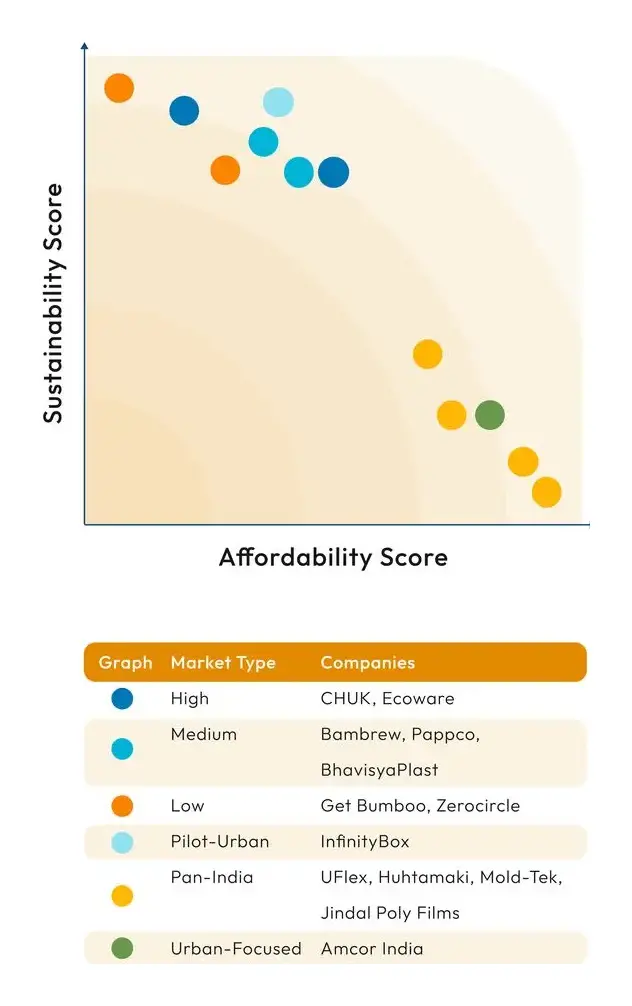
Cheap or sustainable. Rarely both.
Mapping the brands selling food packaging today showed the gap: the sustainable options sit at the expensive end, and the cheap ones are plastic. Seven in ten containers in use are still conventional plastic.
Comparing materials
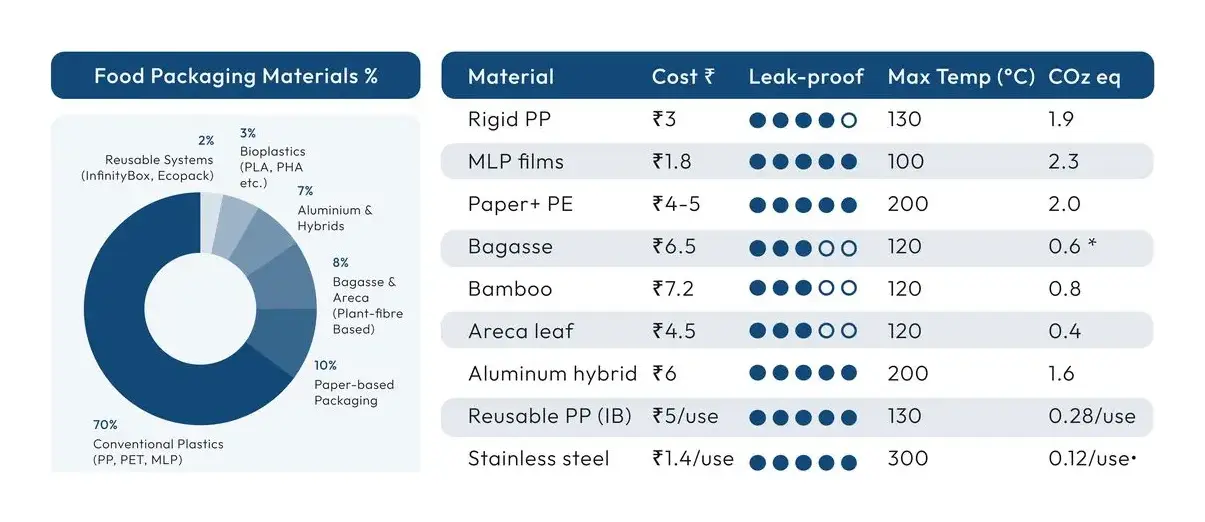
What each material costs, holds and leaves behind.
Cost per container, leak-proofing, heat tolerance and carbon, side by side. No single material wins on all of them.
After dinner
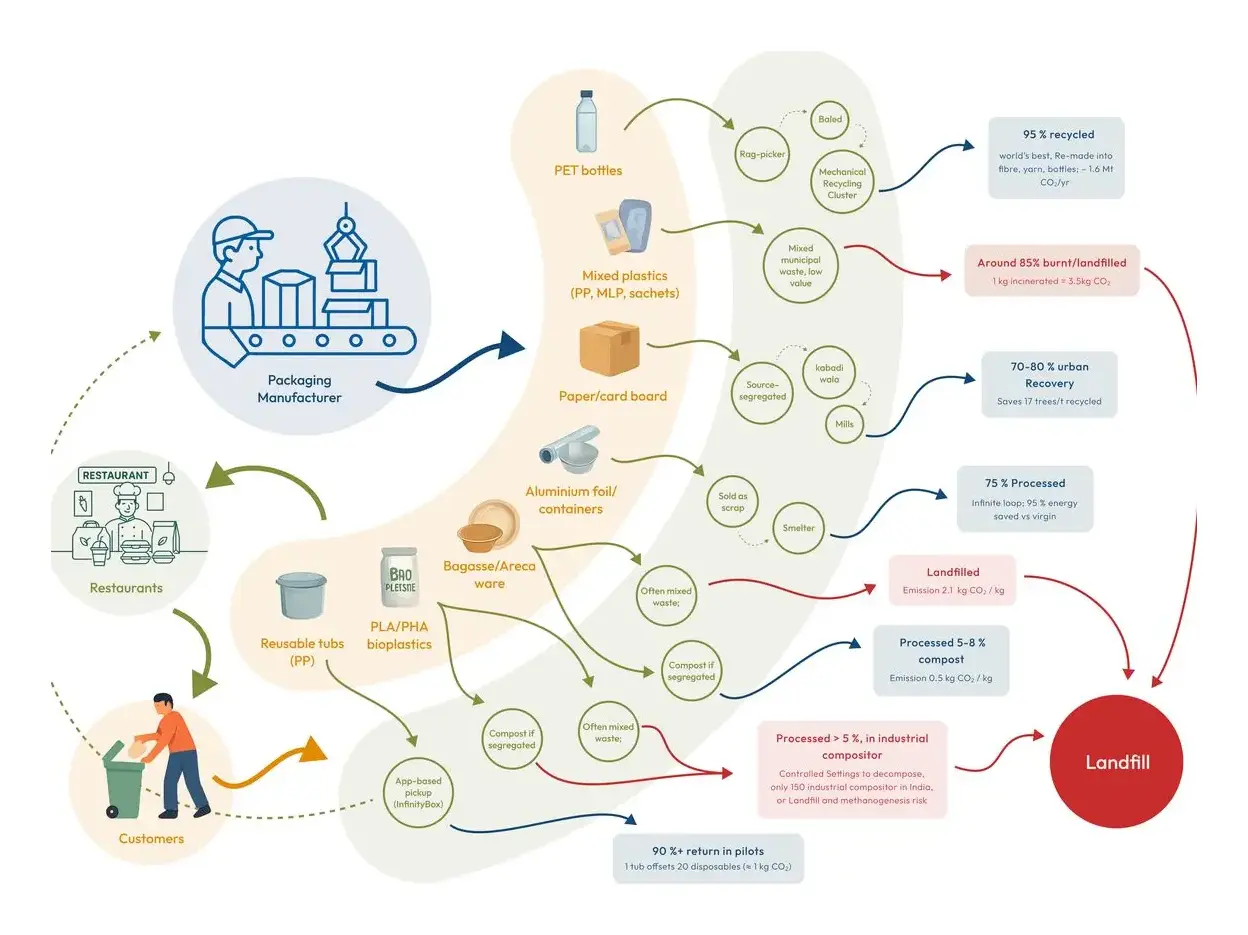
Where each container goes after the meal.
I followed packaging past the customer’s door. Most of it is burnt or ends in landfill. What does come back is picked up by the informal sector, rag pickers and scrap dealers, and only when it is worth something to them.
Who it touches
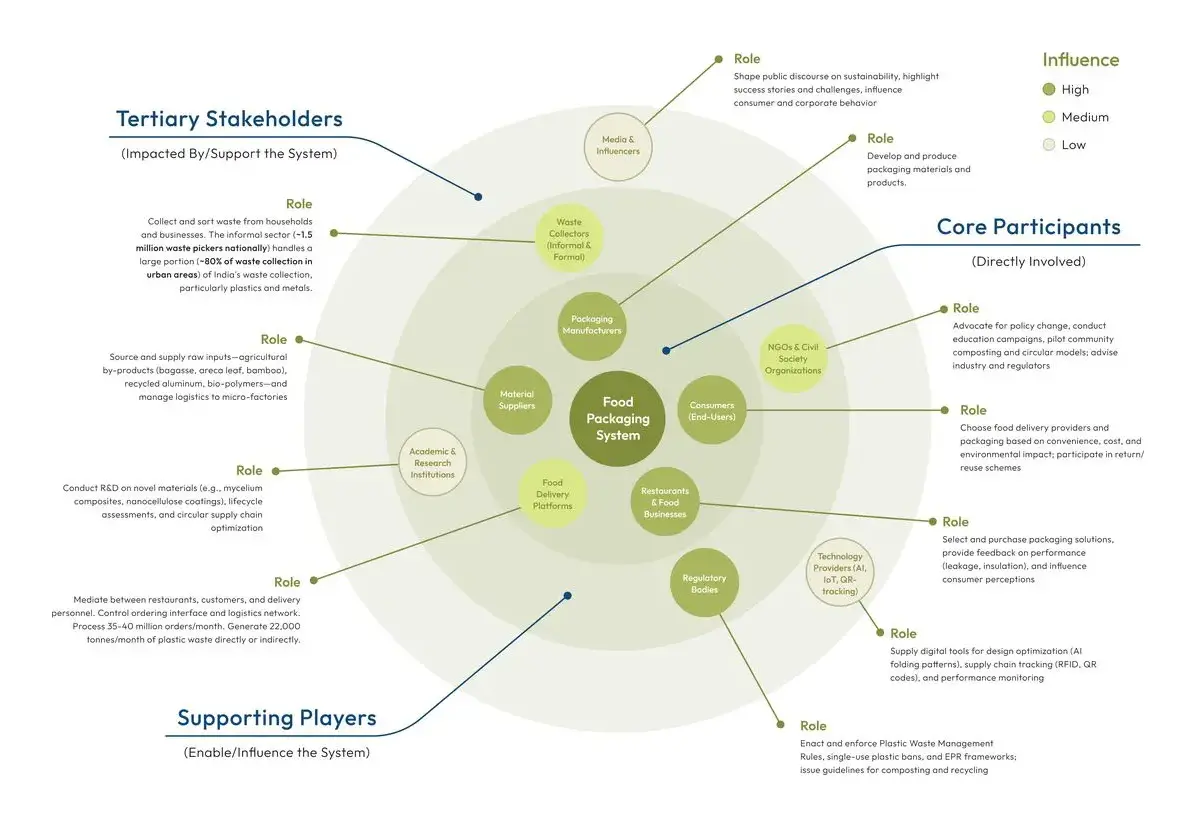
One container, many hands.
Restaurants choose the packaging, customers throw it away, rag pickers and scrap dealers decide what gets recovered, and brands, platforms and regulators shape the rules around all of them.
The people we met
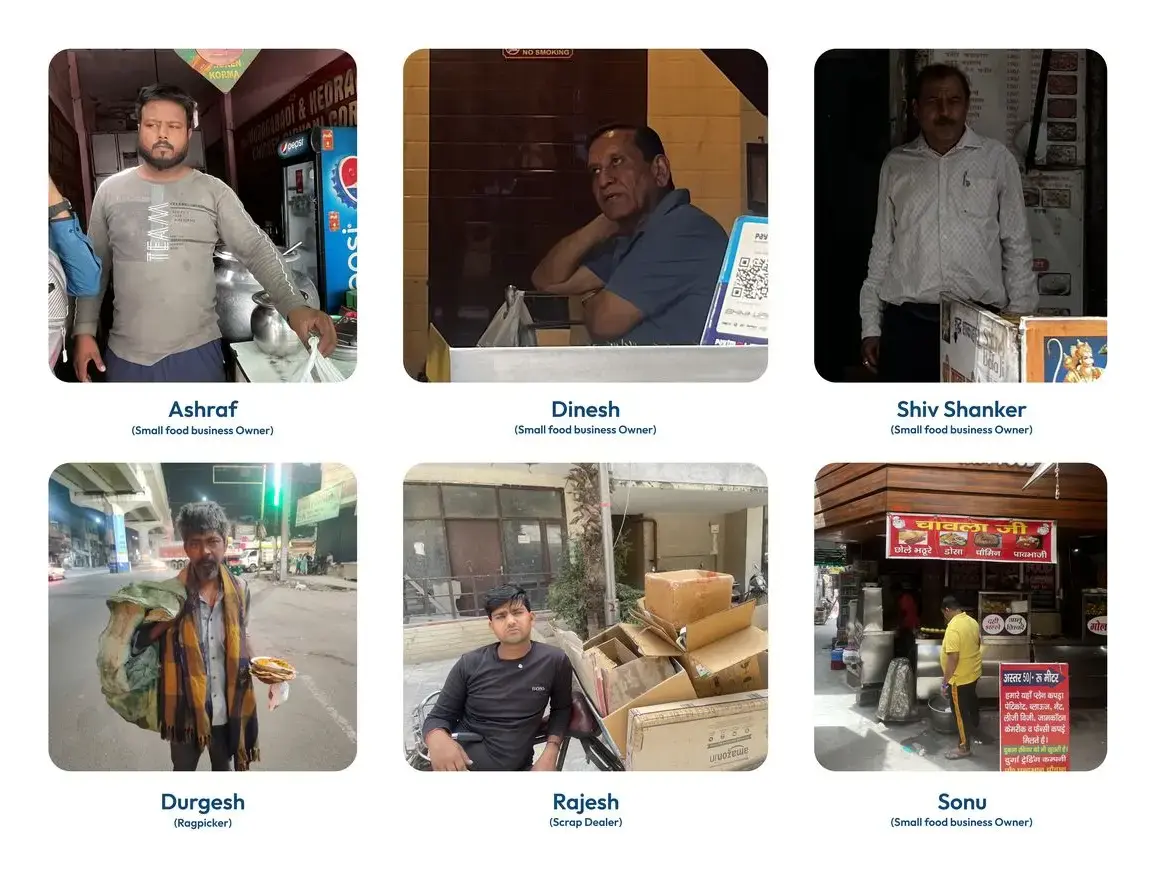
Owners, a rag picker and a scrap dealer.
Interviews and shadowing with small food business owners and the people who collect their waste, alongside a survey of 25 owners.
Designing for
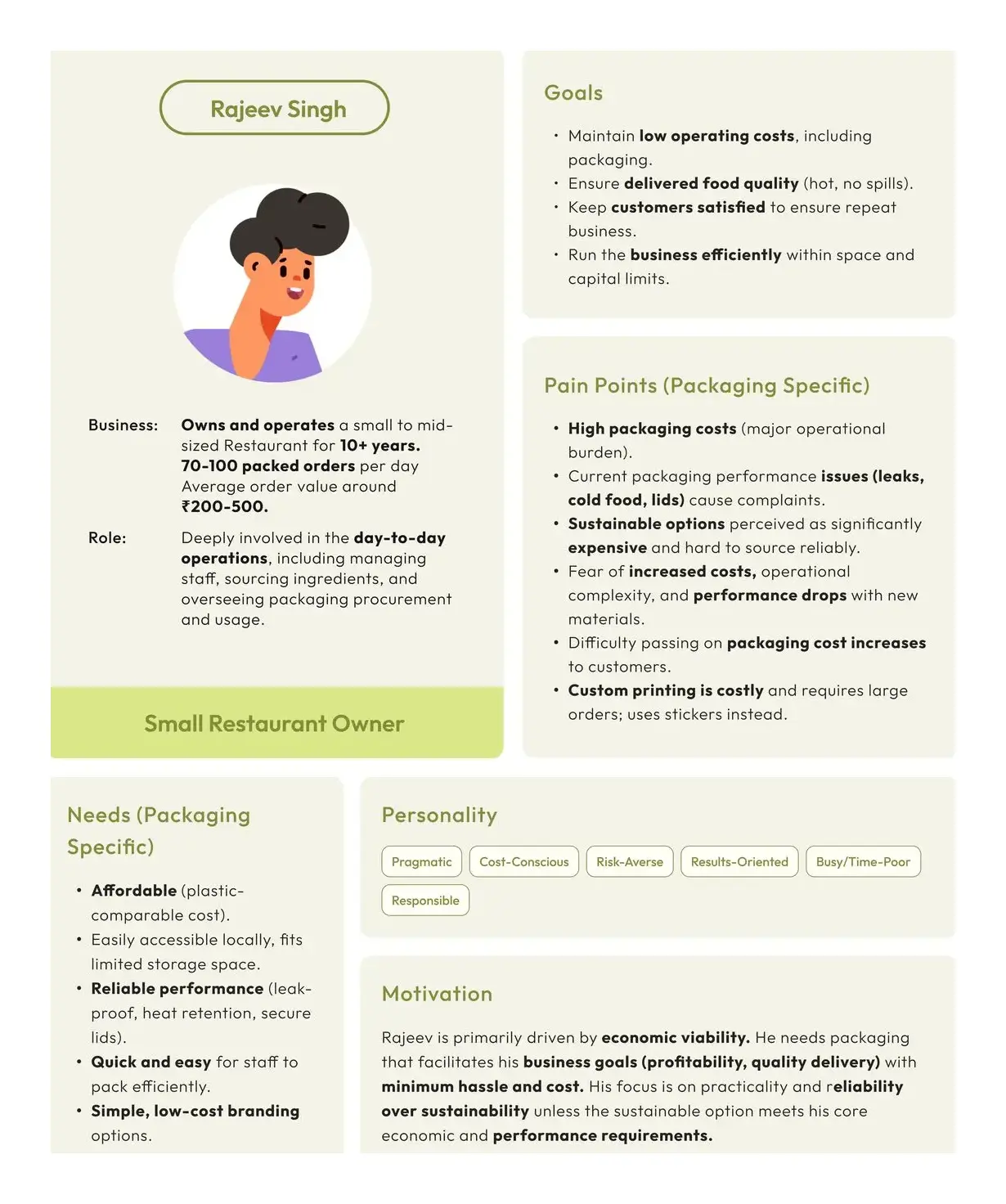
A small restaurant owner, 70 to 100 packed orders a day.
Rajeev runs a small restaurant with an average order of ₹200–500. He would use better packaging if it cost the same, didn’t leak, and didn’t make his day harder. Sustainability on its own doesn’t move him.
Packaging as cheap and reliable as plastic, that the informal sector wants to collect.
Ideation
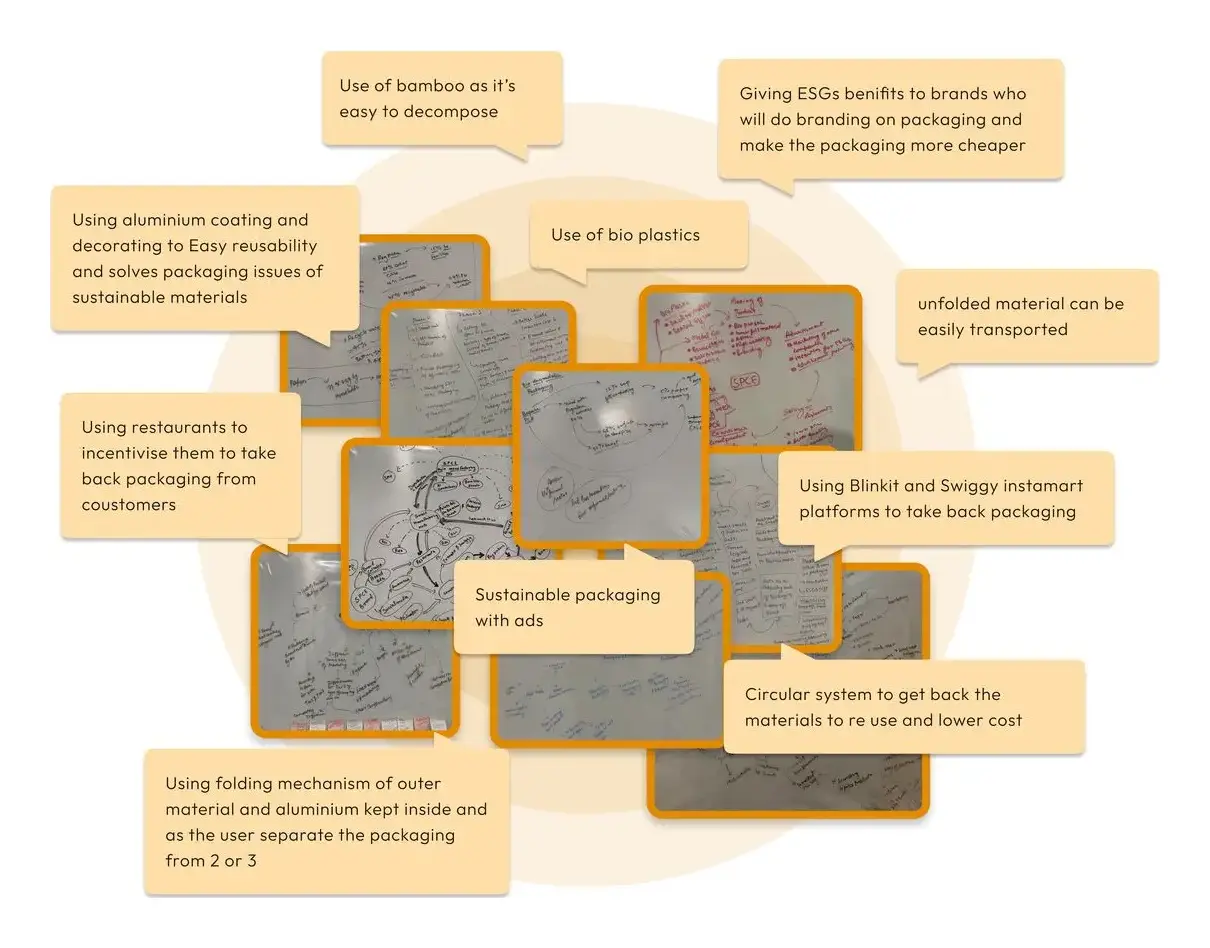
Ideas from the whole loop.
Brainstorming went wider than the container: restaurants taking packaging back, quick-commerce riders collecting it, ads on the pack paying for it, a fold that lets the customer separate the materials.
Choosing the material
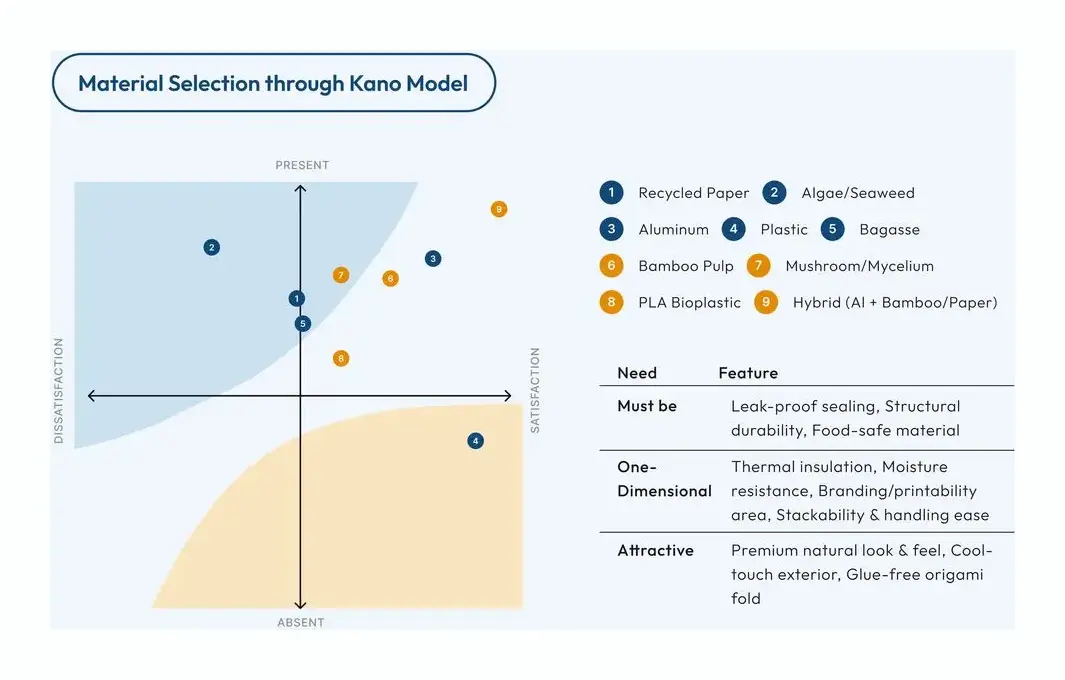
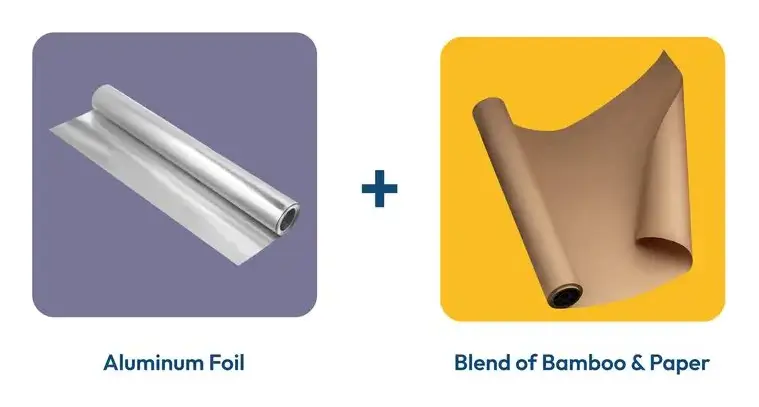
Foil inside, bamboo and paper outside.
A Kano model sorted what a container must do (not leak, stay strong, be food-safe) from what delights. Only a hybrid met the must-haves: an aluminium foil inner layer for the food, and a folded outer of bamboo and recycled paper.
Making it
From what exists to a fold that works.
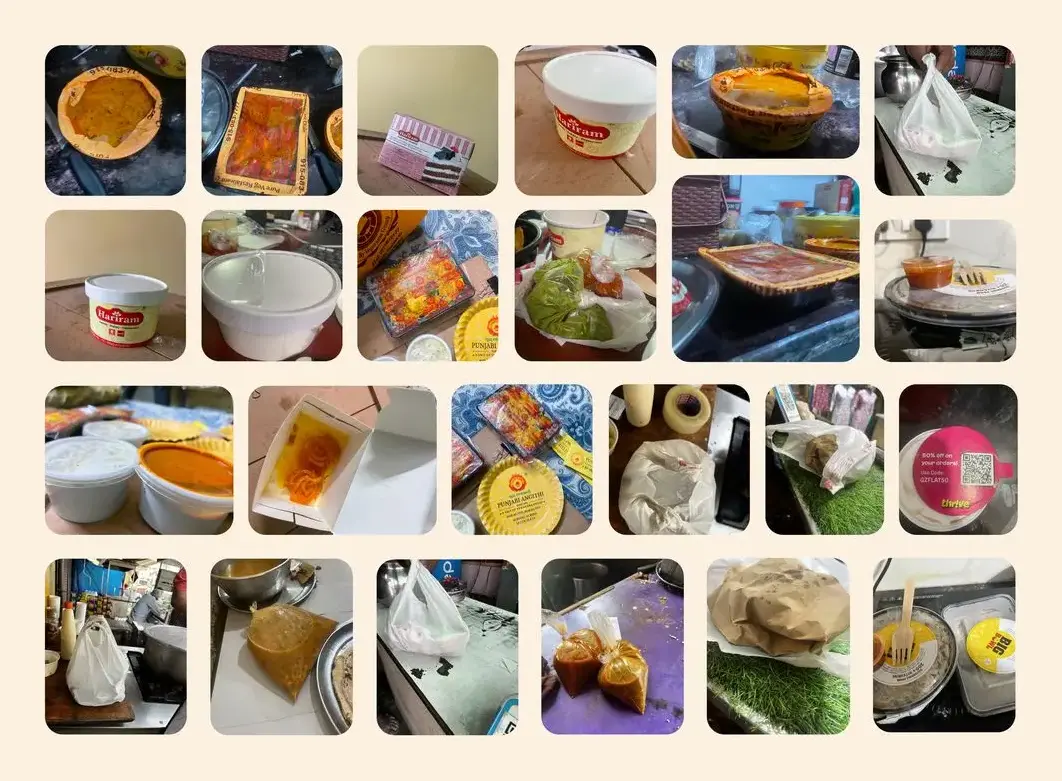
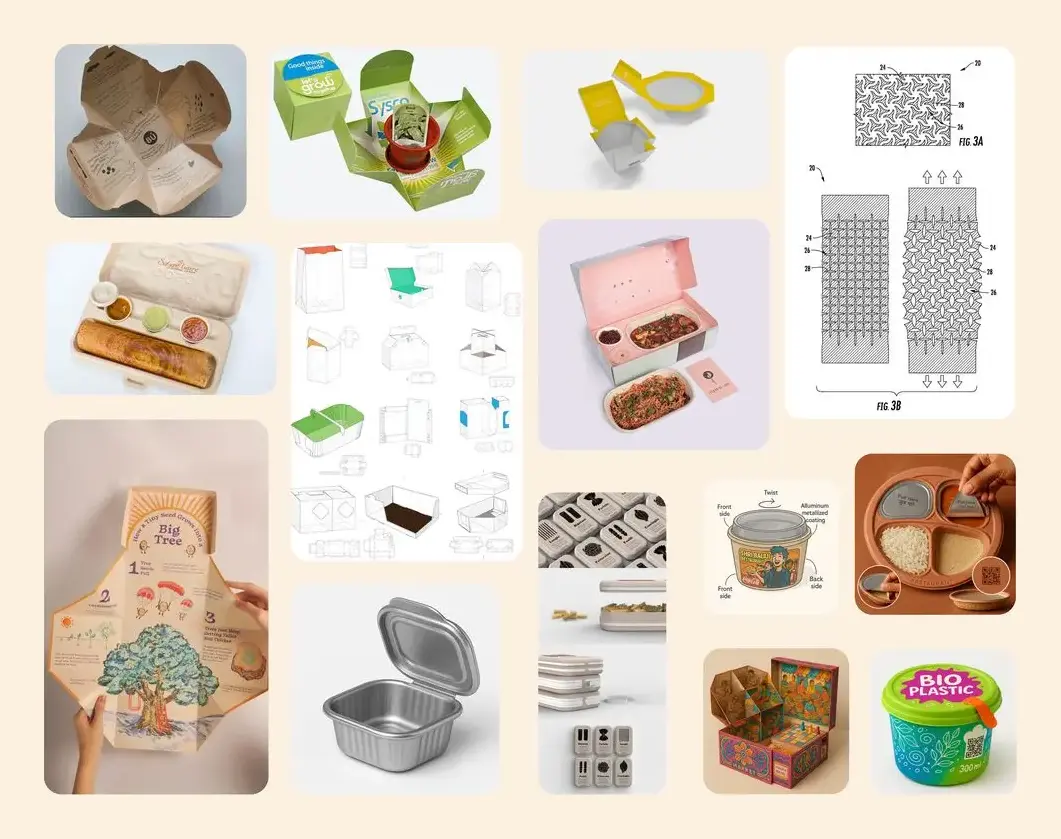
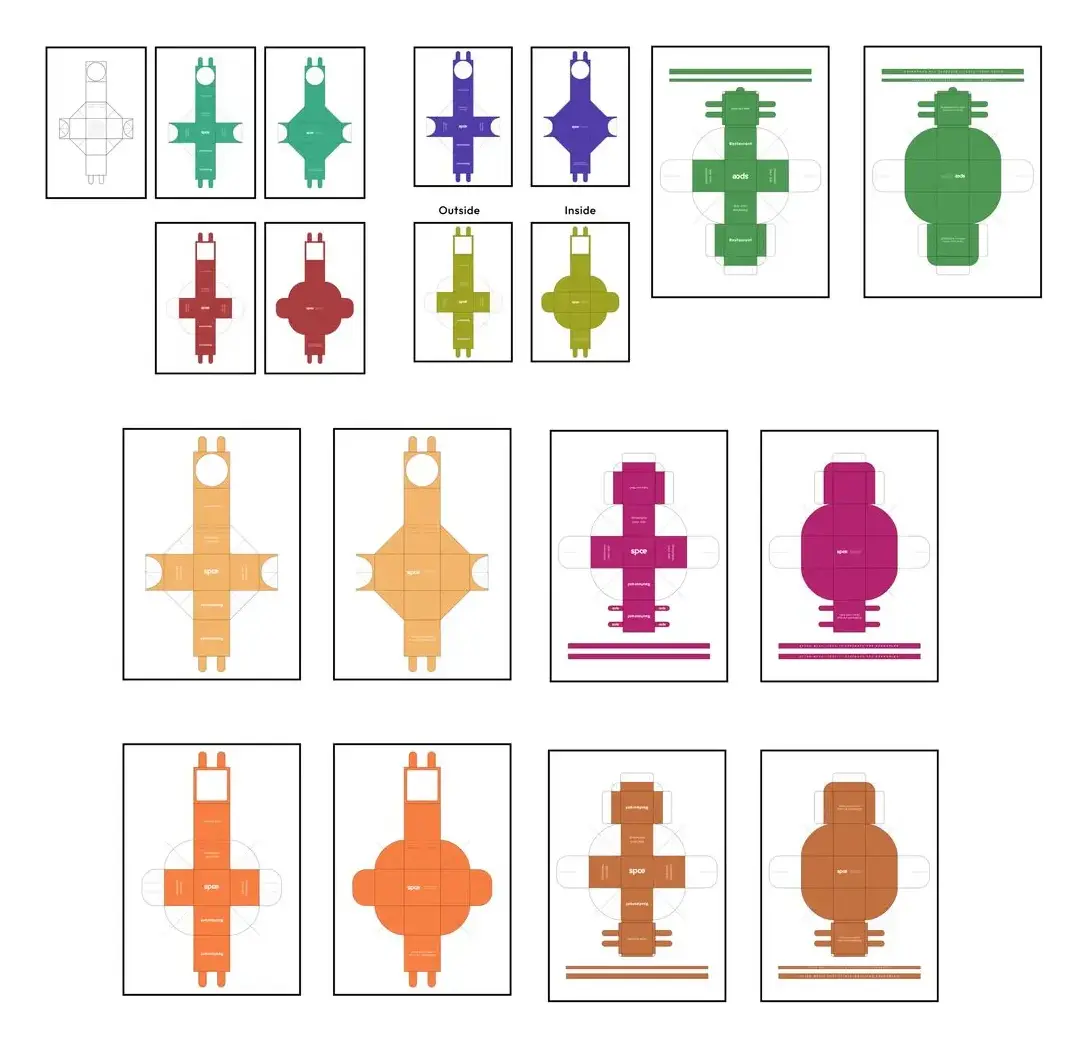
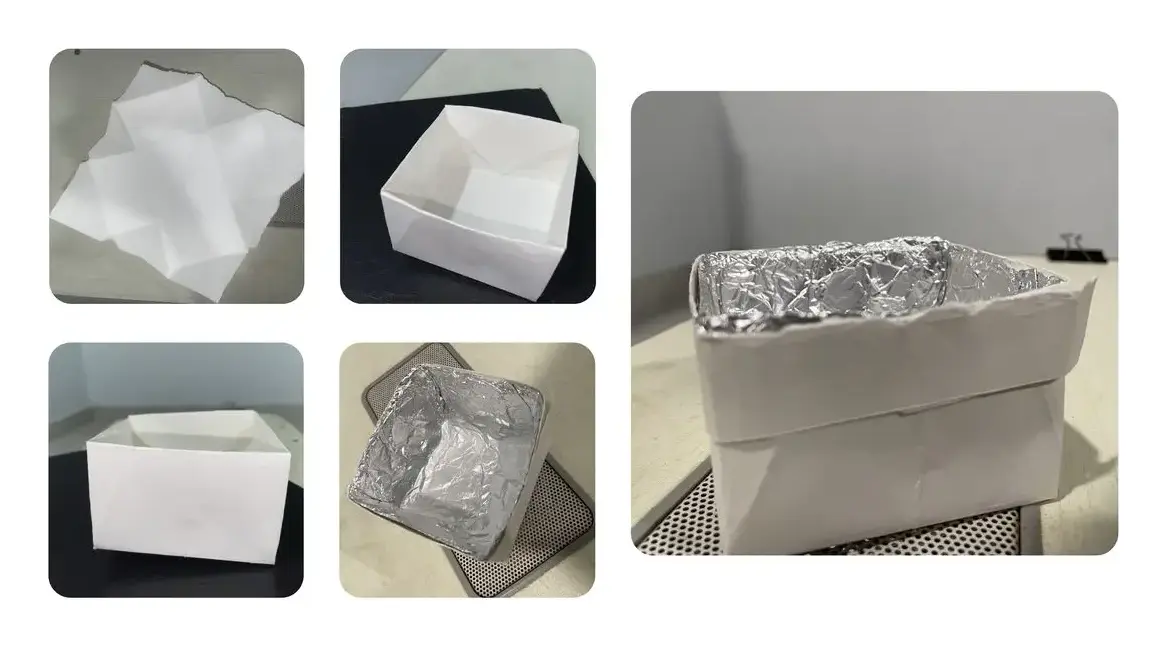
I started with the packaging restaurants already use, collected references for folded structures, drew dielines, and built the first prototypes by hand.
The container
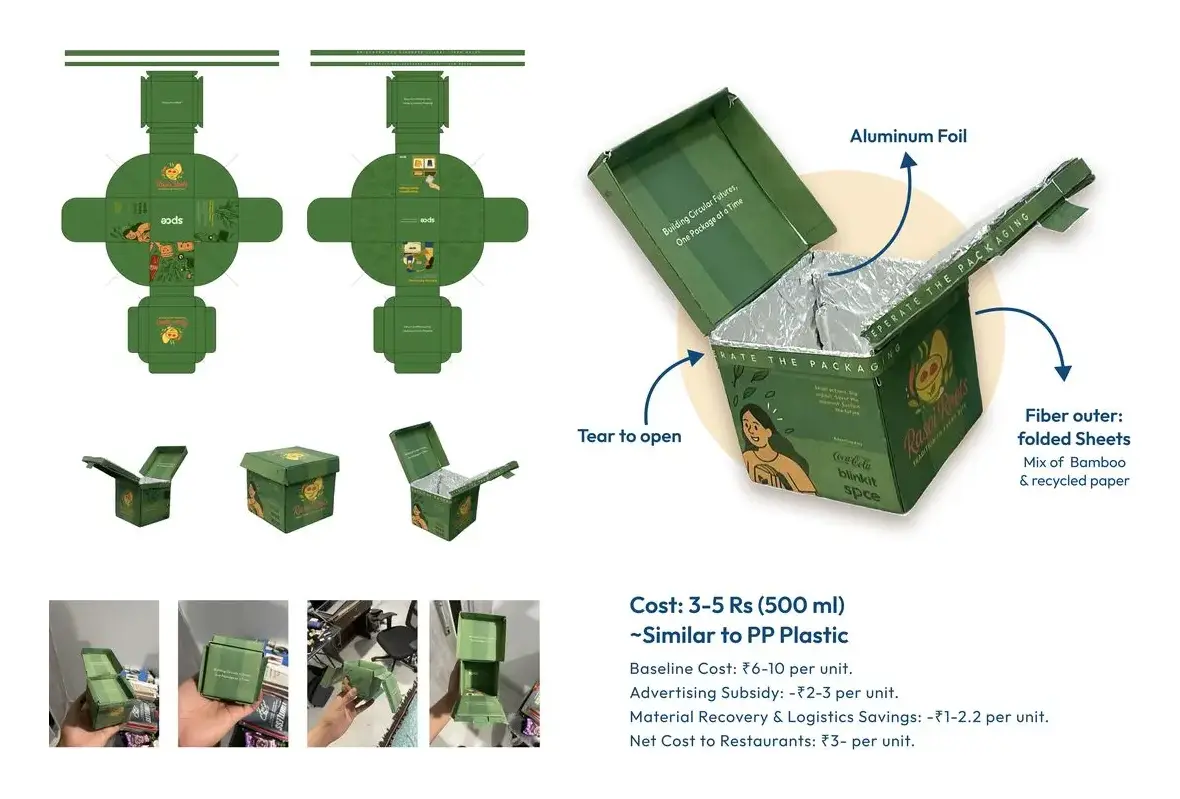
Two parts, easy to tear apart, about ₹3–5.
A folded fibre outer and a foil liner that holds heat and grease. Tear it open after the meal and the materials separate cleanly for recovery. With ads printed on the pack offsetting the cost, a 500 ml container lands at about ₹3–5 for the restaurant, close to plastic.
The loop
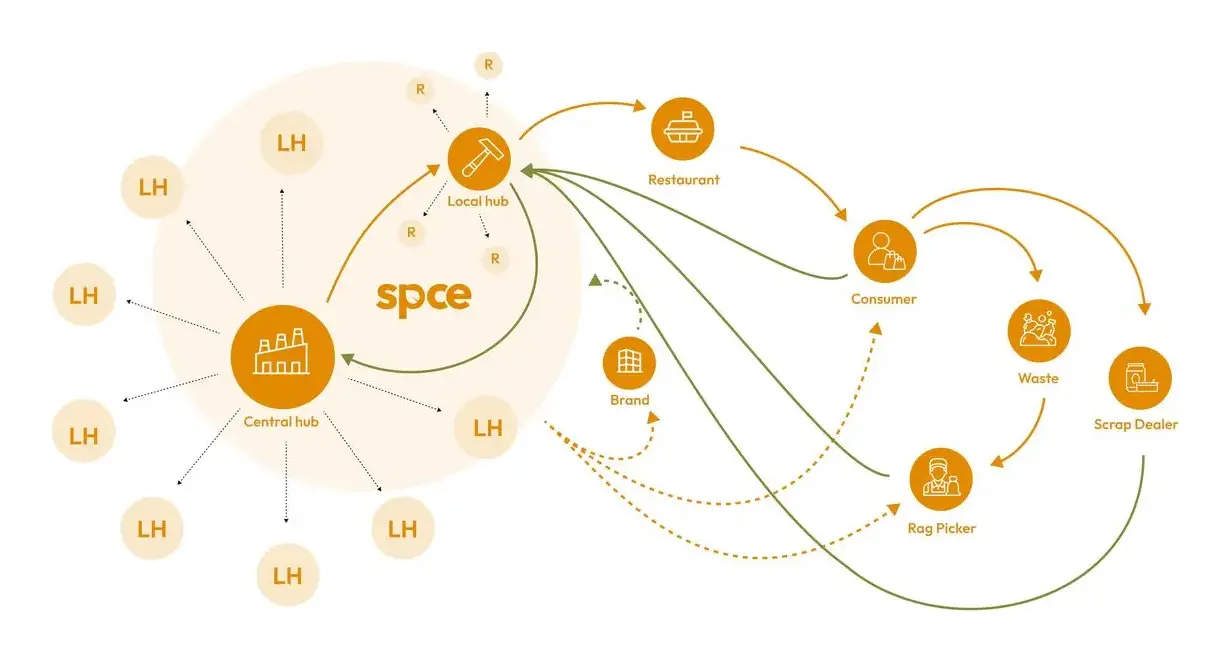
Hubs that make it, and take it back.
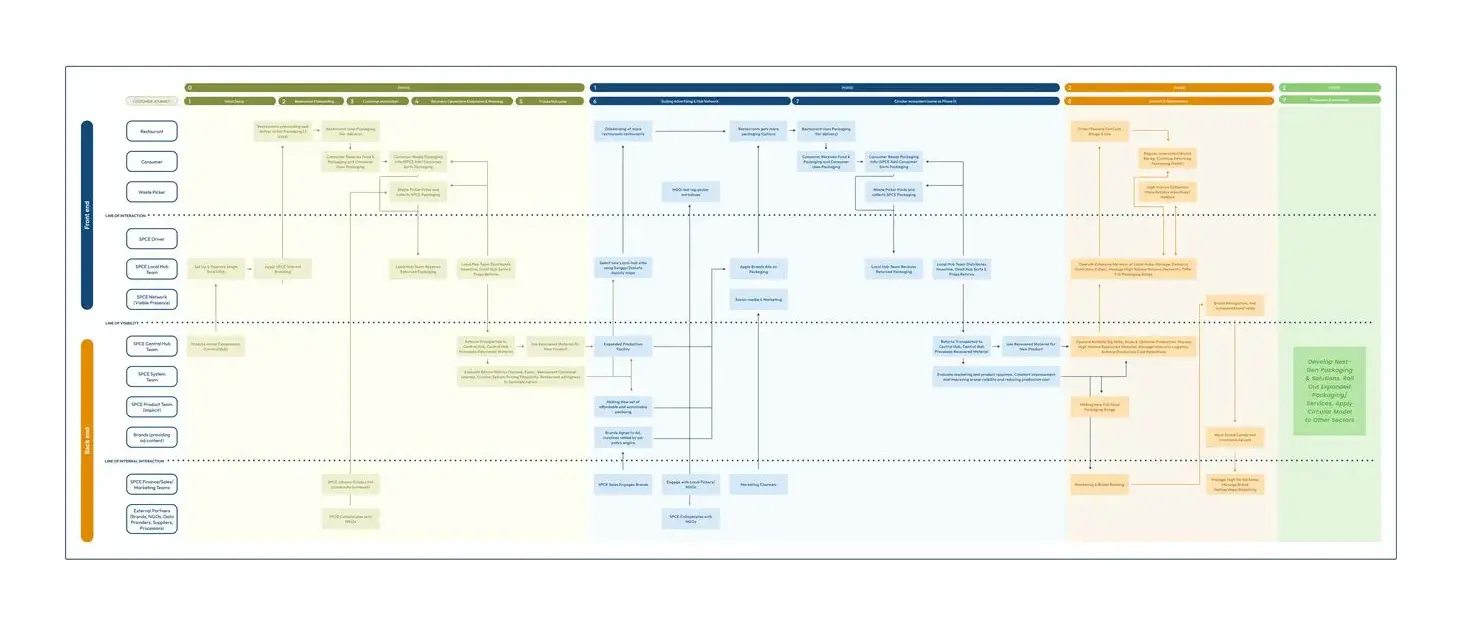
A central hub processes material and makes components. Local hubs near restaurants assemble and deliver packs, then collect used ones from restaurants, customers and rag pickers and send them back to the central hub.
The brand
A brand people trust, paid for by the pack.
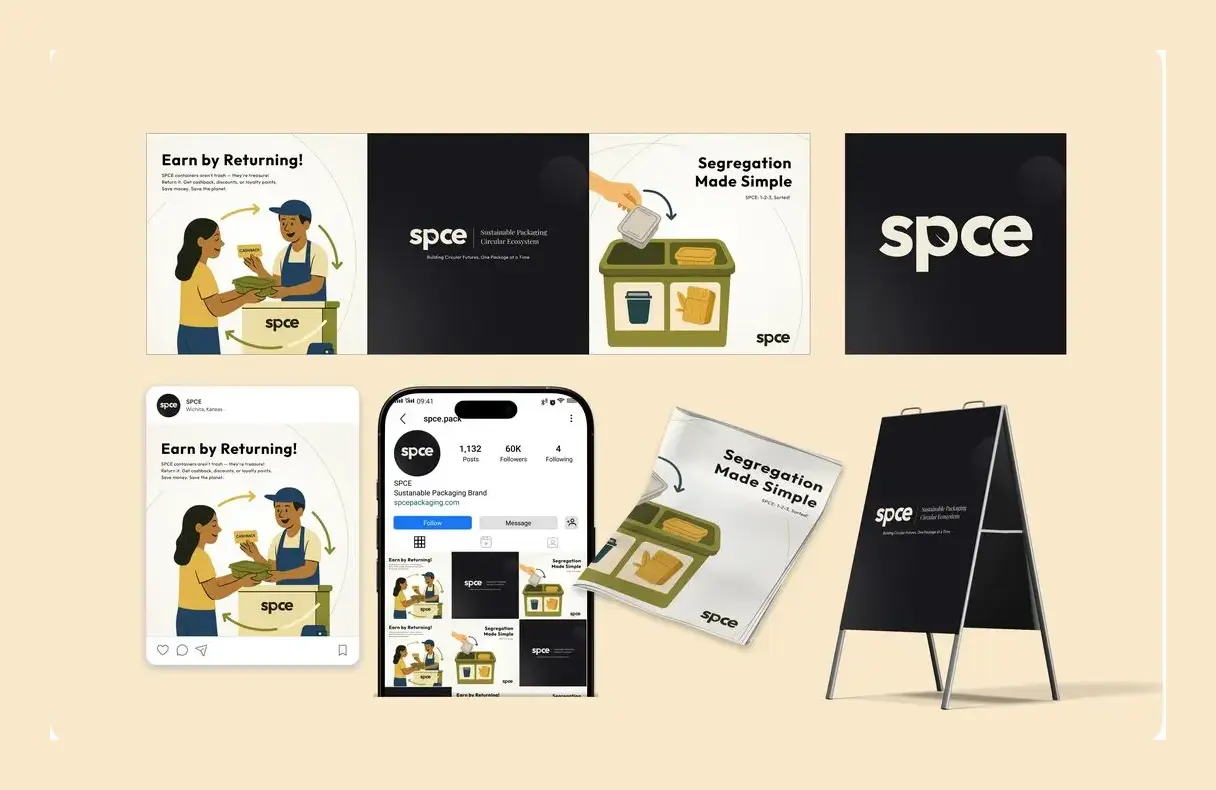
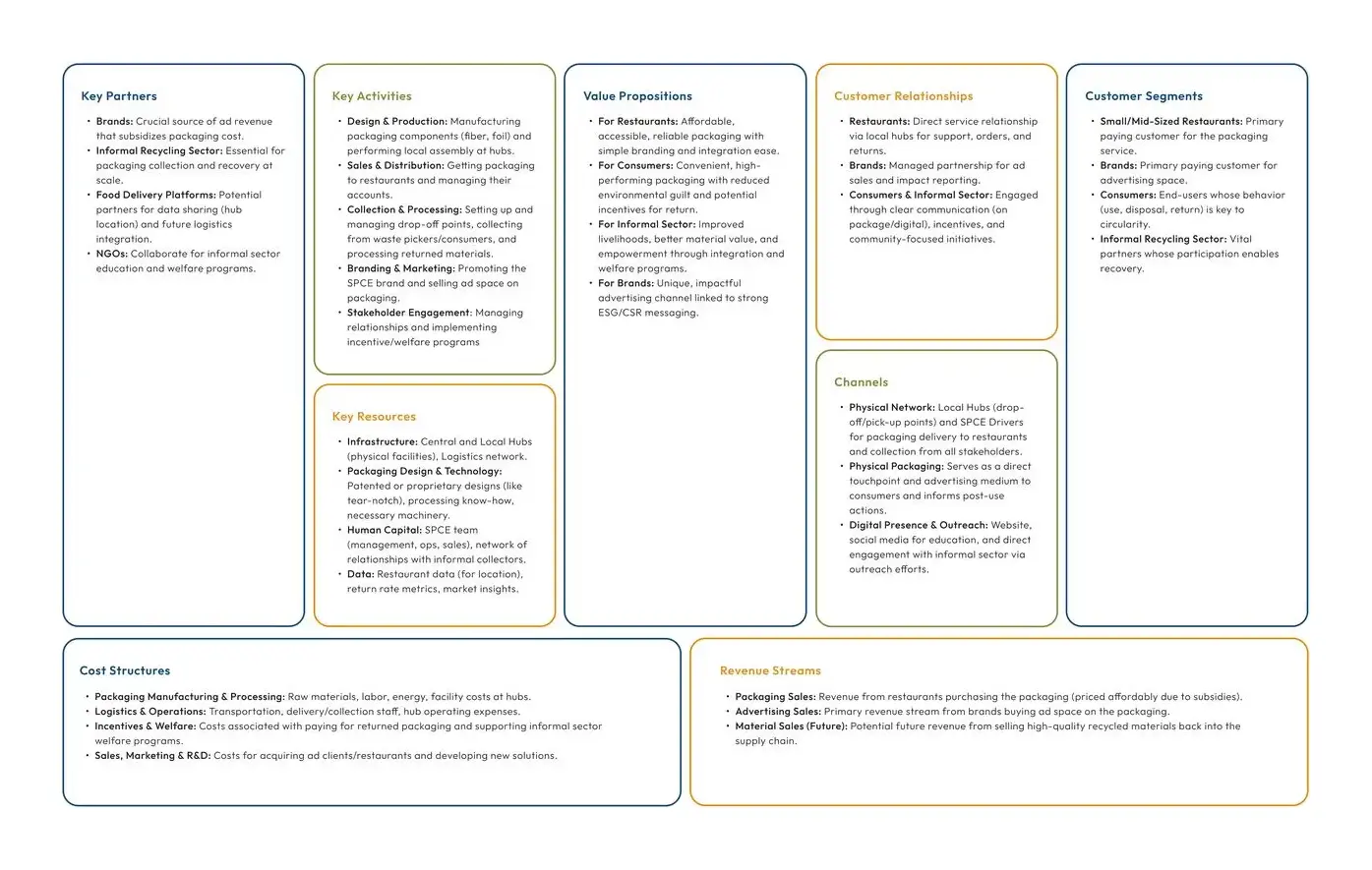
The brand carries the message on the container itself, teaches customers to return and separate, and sells ad space that brings the price down for restaurants.
Service blueprint
What has to happen behind every container.
Business model
Who pays, and why it adds up.
A container,a loop, and a brand.
A solo masters project at Delhi Technological University.